EasyUEFI is a free and lightweight utility which helps you manage and manipulate boot options of EFI and UEFI systems.
With this application, users can easily configure the boot order without having to modify any options in the system BIOS menu.
Windows 7AIOSP1EnglishUpdateJan2017x32x64.iso. No files in this folder.
The program interface is clean and provides the ability to quickly view boot information in Windows. Without any extra setup, EasyUEFI can change the order of devices to boot.
- Download Windows 7 Disc Images (ISO Files) If you need to install or reinstall Windows 7 you can use this page to download a disc image (ISO file) to create your own installation media using either a USB flash drive or a DVD.
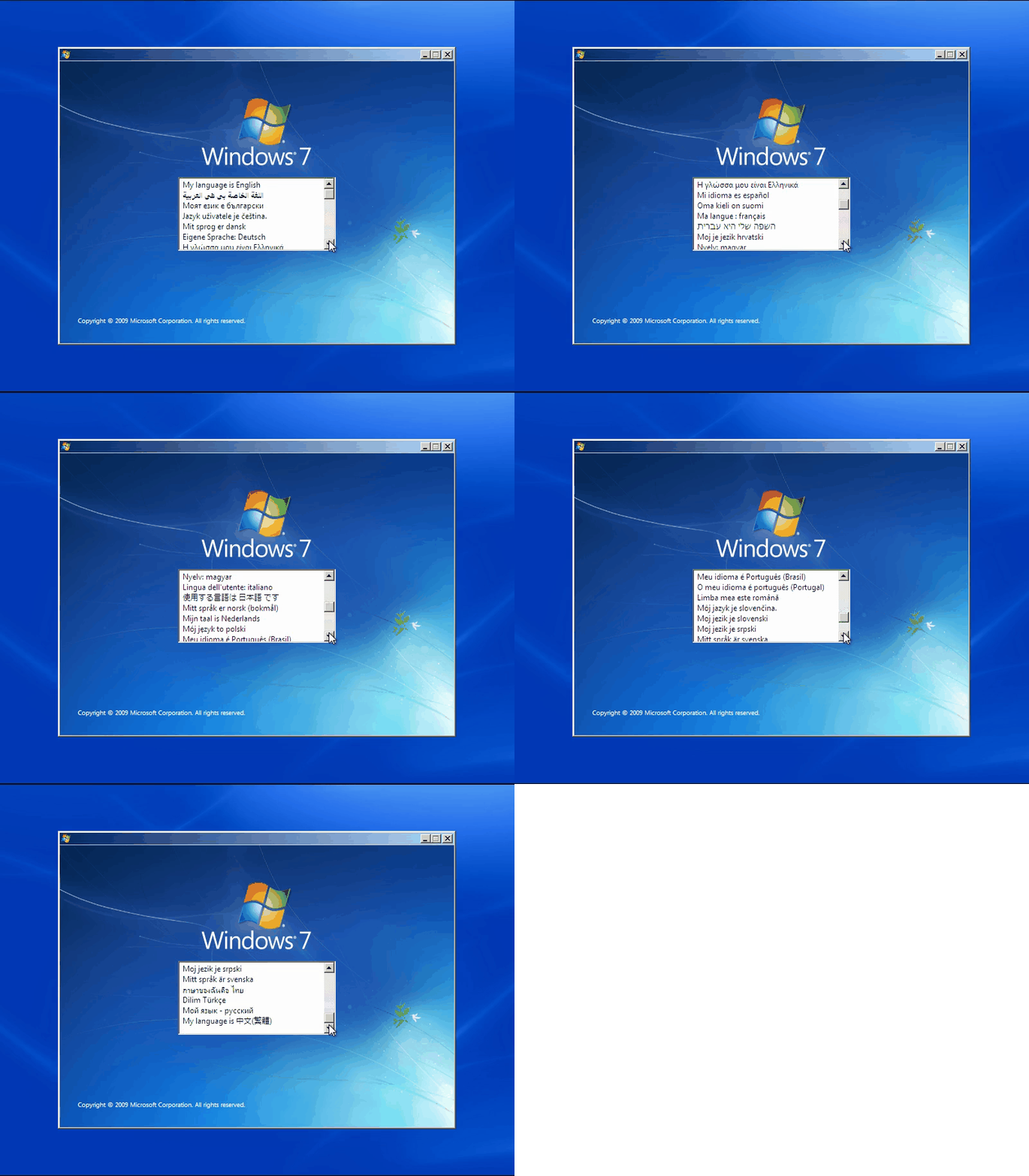
- Furthermore, Windows 7 professional download ISO supports more than 35 languages. To run operations smoothly Windows 7 professional Requirements are 1.0 Ghz, 512 MB RAM and 5 GB Hard Disk Space. If you have modern system then upgrade XP to Windows 7. This Iso file is fully updated and is compatible with both 32 bit and 64 bit PCs.
- Windows 7 uefi iso download. Windows 8 ISO 32/64 Bit Free Download extract windows8 iso: pin. Windows 7 USB/DVD Download Tool - Windows 7 Help Forums.
The interface provides a list of boot order of all entries it finds and can move items in order of boot priority; it also provides buttons to delete, create and edit entries.
Overall, EasyUEFI can be quite useful and provides an uncomplicated way to modify UEFI boot options.
EasyUEFI on 32-bit and 64-bit PCs
This download is licensed as freeware for the Windows (32-bit and 64-bit) operating system on a laptop or desktop PC from disc utilities without restrictions. EasyUEFI 4.5 is available to all software users as a free download for Windows 10 PCs but also without a hitch on Windows 7 and Windows 8.
Windows 7 32 Bit Uefi Iso Download Usb
Compatibility with this entry creator booter software may vary, but will generally run fine under Microsoft Windows 10, Windows 8, Windows 8.1, Windows 7, Windows Vista and Windows XP on either a 32-bit or 64-bit setup. A separate x64 version may be available from The EasyUEFI Development Team.
Filed under:- EasyUEFI Download
- Freeware Disc Utilities
- Entry Creator Booting Software
Recently, I got a new laptop with Windows 8 and I want to install Windows 7 on it. Usually we use a DVD drive to install Windows 7 on our computer. Unfortunately, this is not the solution for my laptop, as it does not have a DVD drive. Thus, I tried to create a bootable USB stick that can also boot in UEFI mode, but so far I have not been successful. So my question is, if anyone knows how I can put the Windows 7 ISO on my USB stick so that I can use it to install Windows 7 on a UEFI computer?
Did you run into the similiar situation? By default, the Windows 7 installation ISO does not support UEFI boot, so the bootable USB installation drive created with the Windows 7 installation ISO does not support UEFI boot. To create a bootable Windows 7 installation USB drive, the program must make changes to the content extracted from the ISO. Now WinToUSB releases a new feature called 'Windows Installation USB Creator' which allows you to create a Windows 7 installation USB drive with a few simple steps, with this feature you can create a Windows installation USB drive to install Windows 7 on both Traditional BIOS and UEFI computers by using the same USB drive. Please note that only 64-bit Windows 7 supports UEFI boot, so you cannot use a 32-bit Windows 7 to create a UEFI bootable USB installation drive.
Tutorial to use with WinToUSB to create an UEFI bootable Windows 7 installation USB drive to install Windows 7.
Step 1. Connect the destination USB flash drive to the computer with an installed copy of WinToUSB.
Step 2. Run WinToUSB as administrator.
Windows 7 32 Bit Uefi Iso Download 32-bit
Step 3. Click 'Tools' > 'Windows Installation USB Creator'.
Step 4. Click the button and select the Windows 7 installation ISO from the open dialog box.
Step 5. Select the USB drive in the drop-down list. If your USB drive is not correctly recognized by WinToUSB, you need to click the button for the program to recognize the USB drive. After you select the USB drive, a pop-up will appear asking you if you want to format it to continue.
Step 6. Click 'Yes'. After clicking 'Yes', WinToUSB begins formatting. Please wait until that format operation is complete.
Step 7. After successfully formated the USB drive, click 'OK', WinToUSB begins creating the Winddows installation USB drive.
Step 8. Click 'OK' when the creation is complete.
Follow these simple steps, you can create a UEFI bootable Windows 7 installation USB flash drive from a Windows 7 installation ISO with WinToUSB easily, then you can use this bootable USB drive to install Windows 7 on both Traditional BIOS and UEFI computers.Related Guides
Coments are closed
© 2020 - rap4ure.netlify.app